2024 Romanian parliamentary election and far right correlation
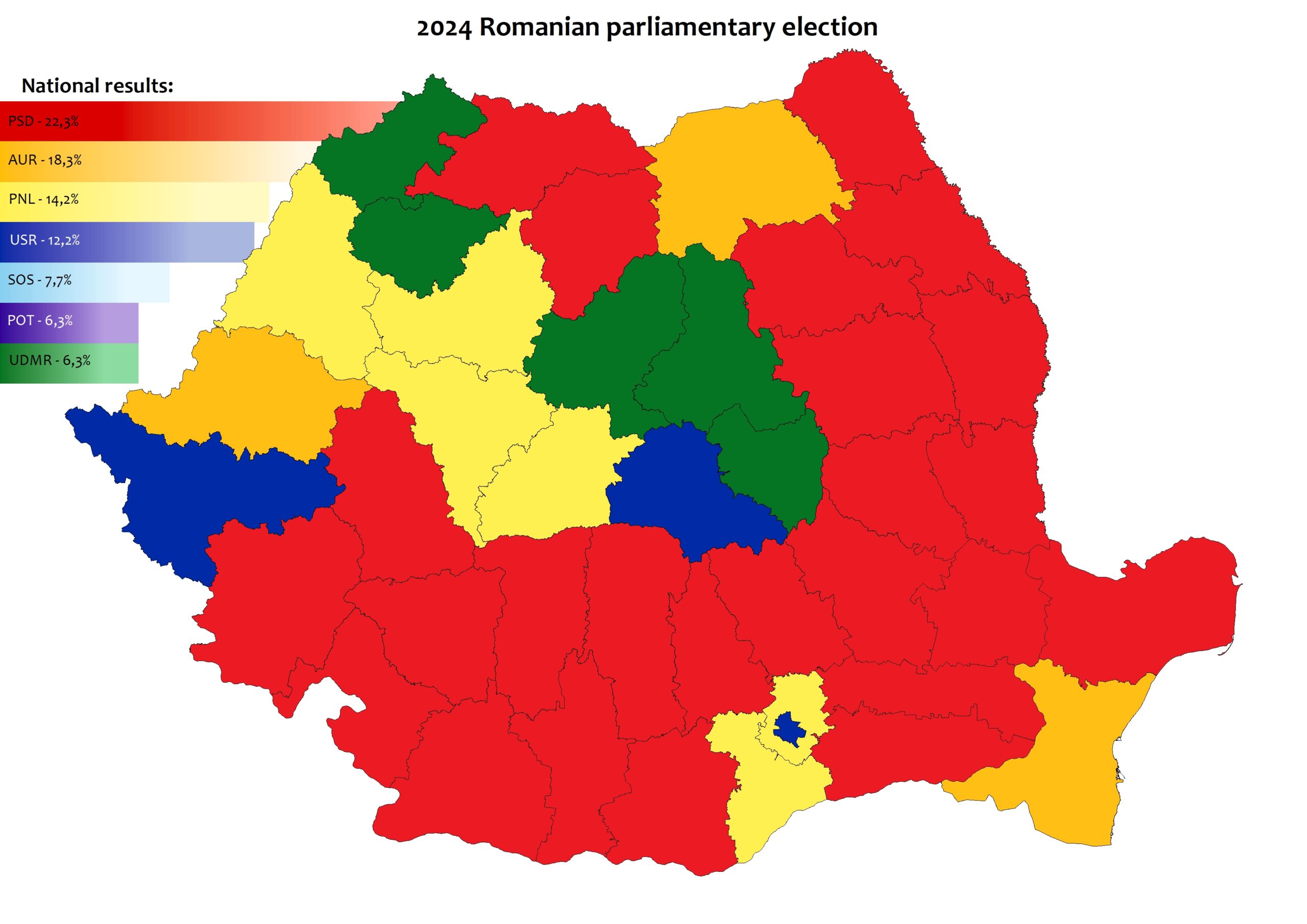
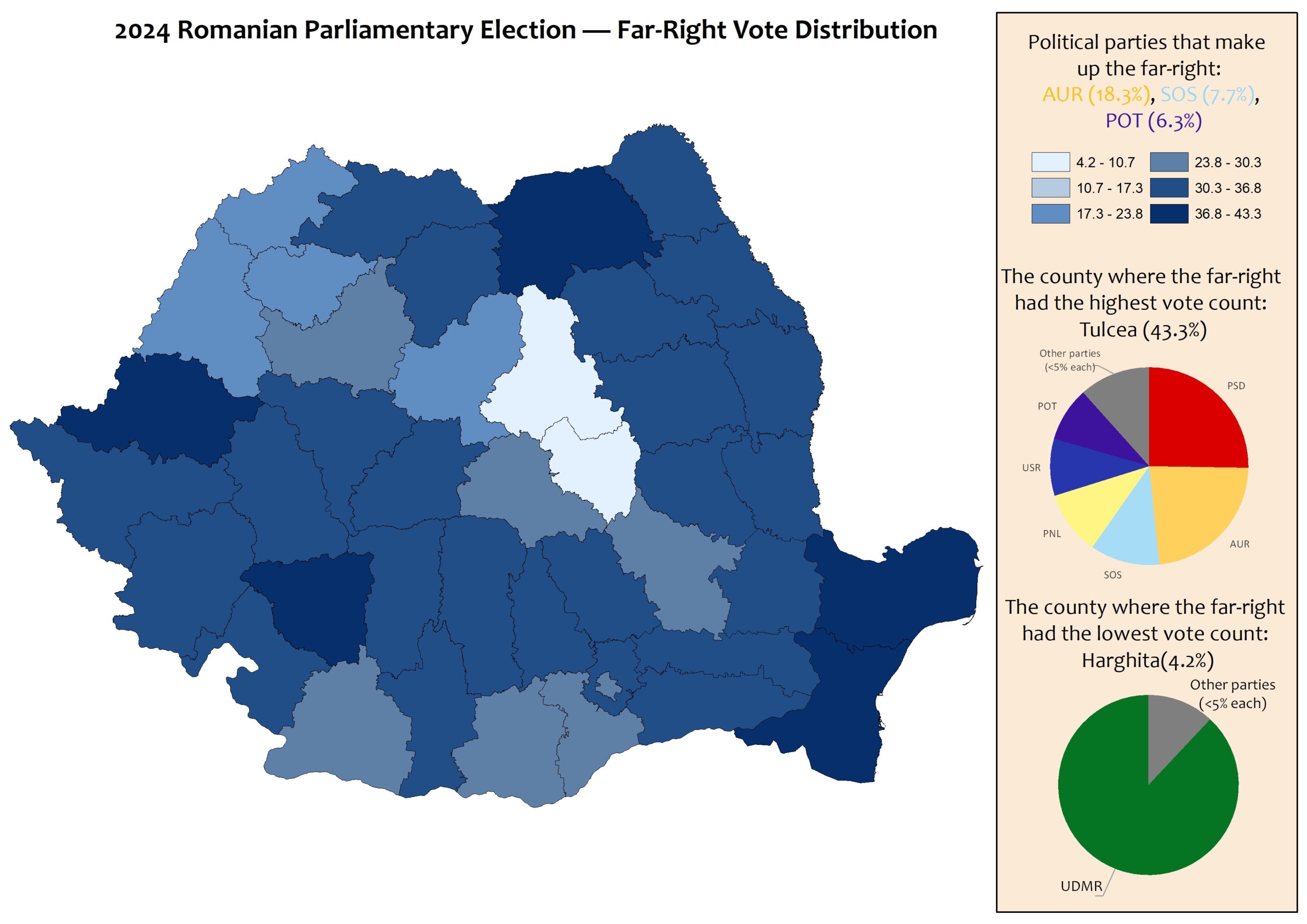
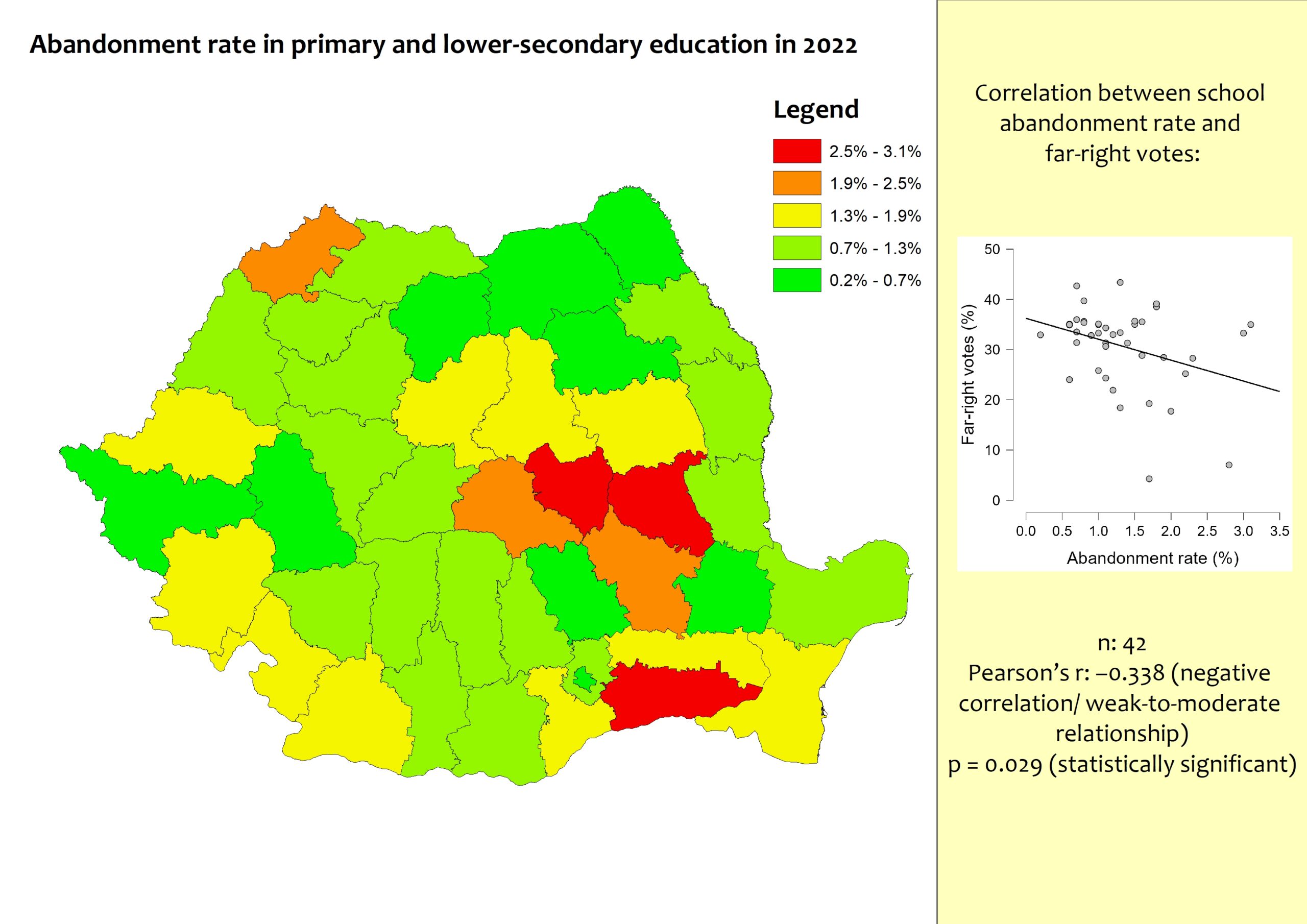
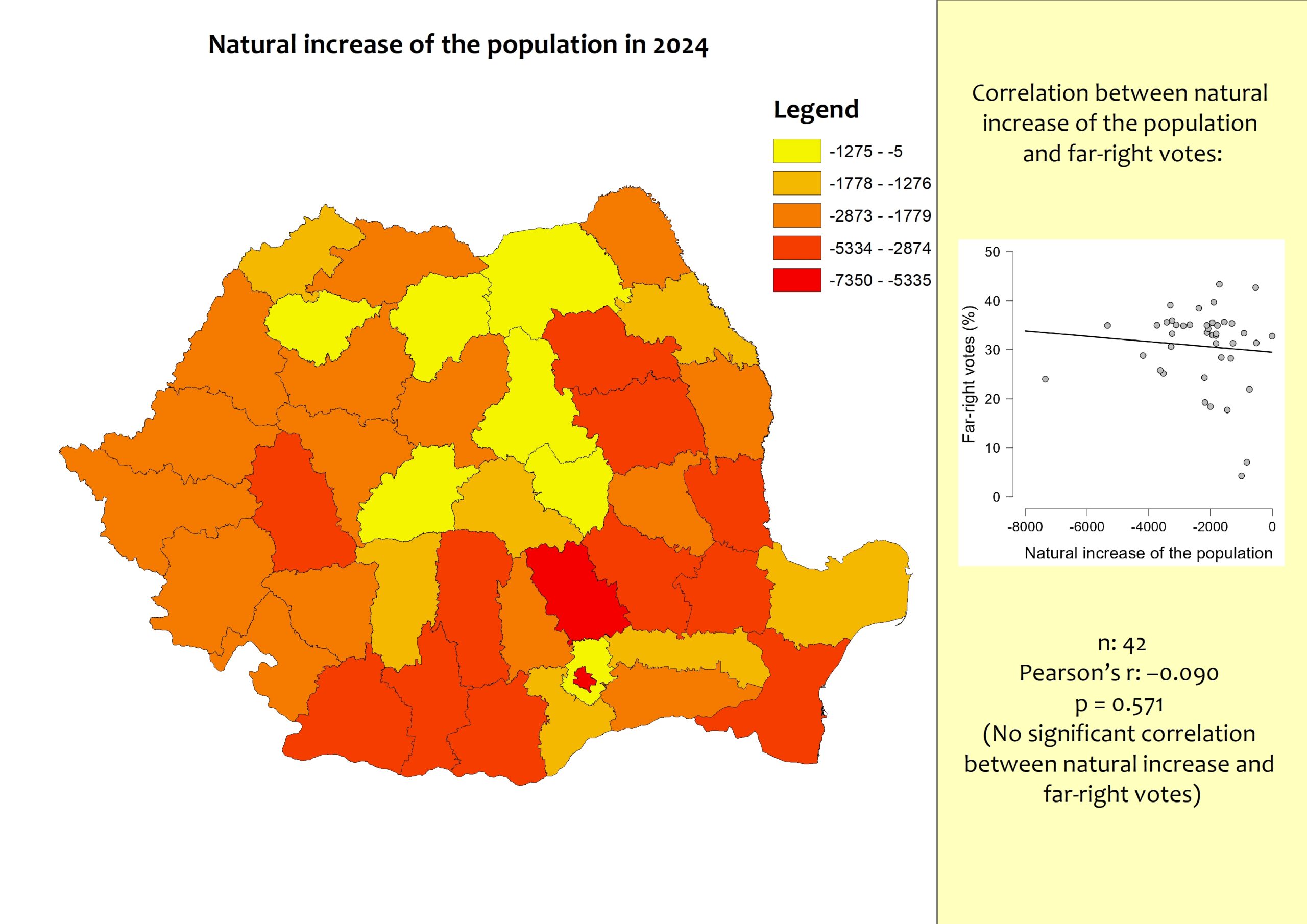
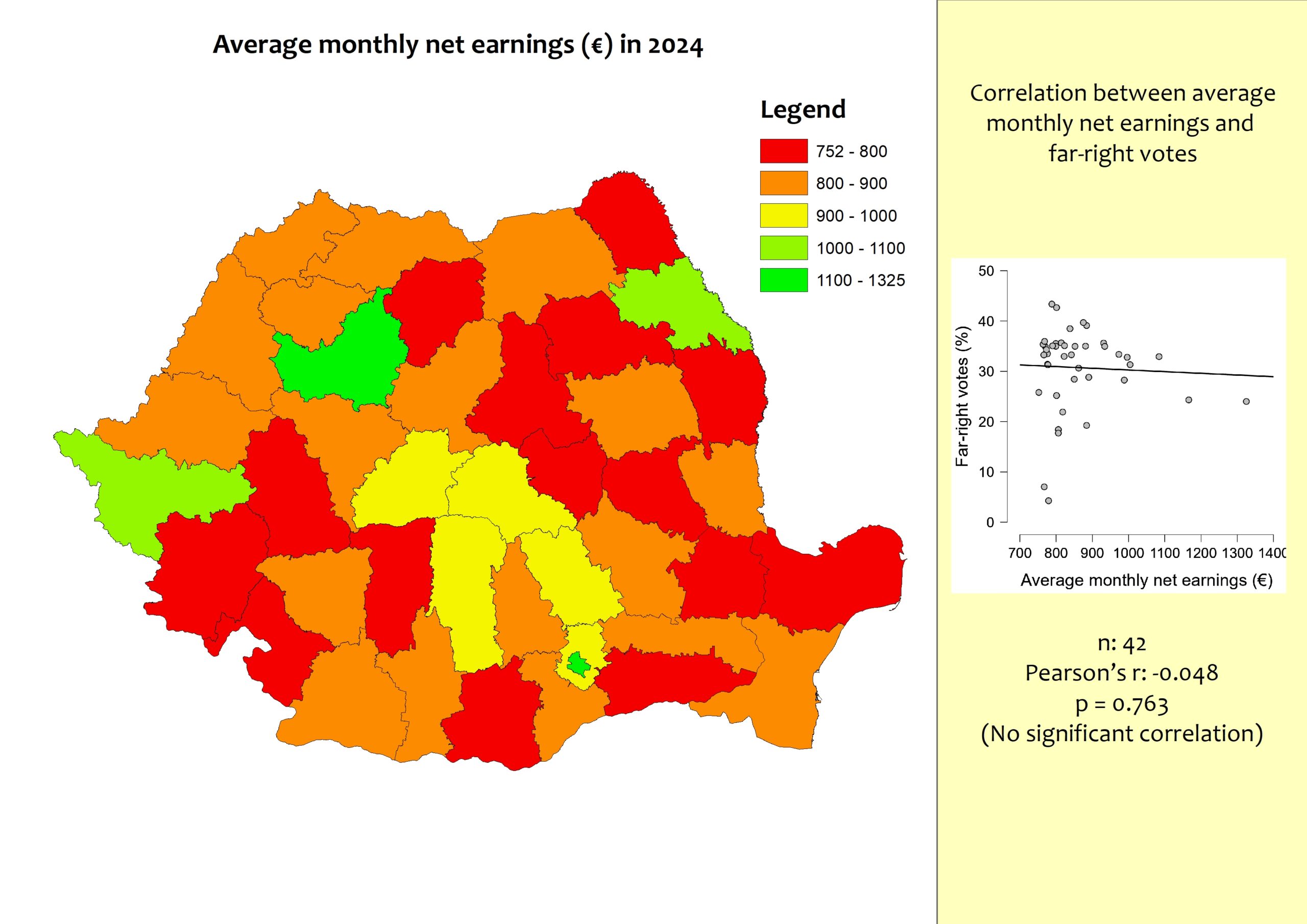
On December 1, 2024, Romania held its parliamentary elections, in which the far-right bloc secured 32.2% of the votes, with AUR (Alliance for the Union of Romanians) finishing in second place. This analysis aims to examine whether there are significant correlations between far-right vote shares and various socio-economic factors, including school dropout rates in primary and lower-secondary education, natural population growth, and average net monthly earnings.
Contrary to the common assumption that far-right parties primarily attract support from poorer and less educated populations, the data suggest that this is no longer the case. The support base for such parties has broadened, and as a result, there is no strong correlation between their vote shares and the aforementioned socio-economic indicators. The strongest observed correlation appears in school dropout rates at the primary and lower-secondary levels, though it remains weak to moderate in strength. The weakest correlation is found in the natural increase of the population, a factor chosen due to Romania’s ongoing depopulation crisis. Many rural areas are now inhabited predominantly by the elderly, while others are close to complete depopulation.
The rapid rise of far-right parties represents a significant challenge for Romania. Their growth has outpaced that of similar movements in other European countries, and projections indicate that they may soon surpass mainstream political parties.
Sources: